
Fire Equipment
CO₂ fire extinguishers
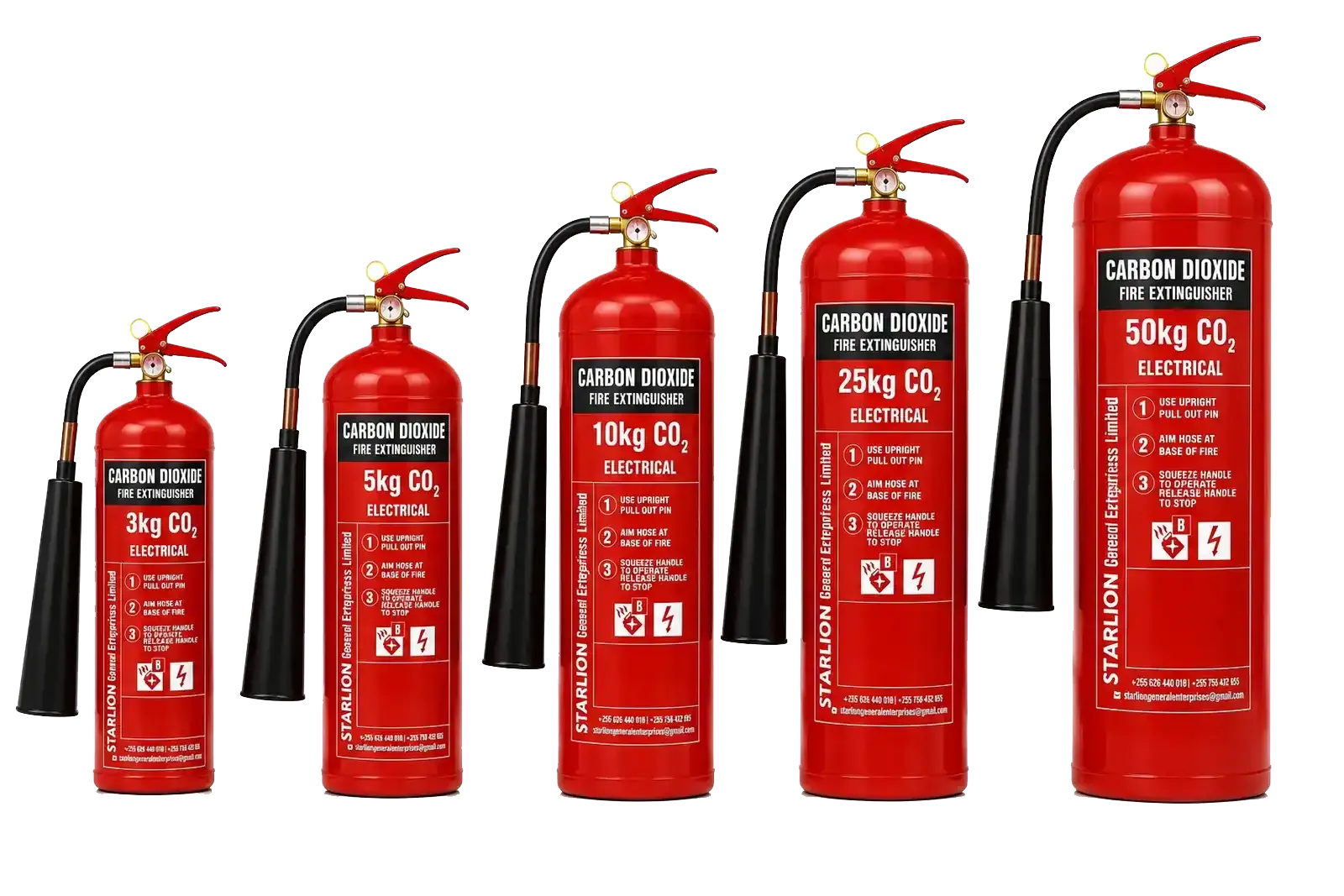
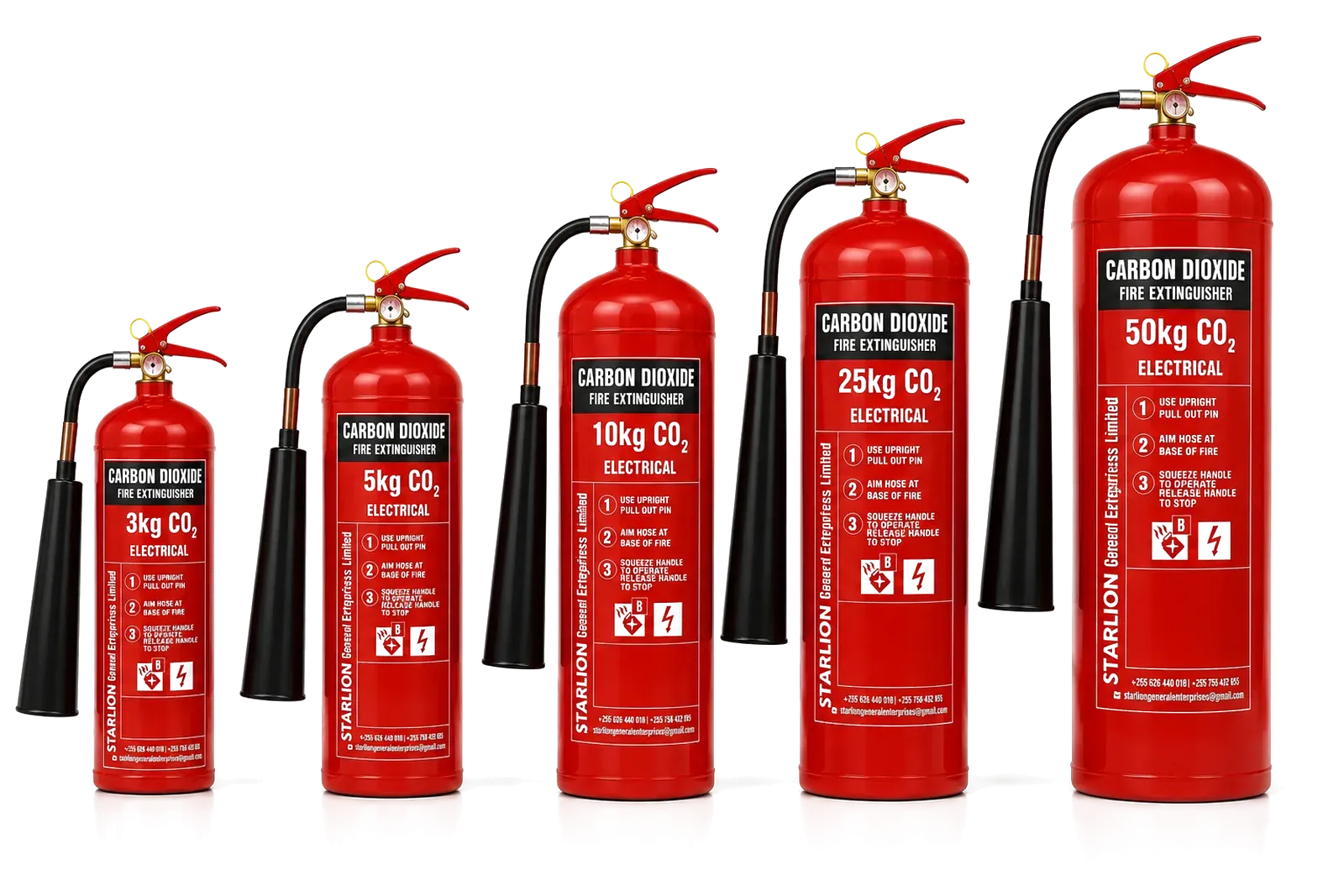
Carbon dioxide fire extinguishers are commonly used for selected electrical equipment and Class B fire risks where a clean, residue-free extinguishing agent is beneficial.
- Product Type
- Portable Fire Extinguisher
- Extinguishing Agent
- Carbon dioxide (CO₂)
- Fire Class Context
- B
- Available Capacities
- 3KG, 5KG, 10KG, 25KG, 50KG
A clean agent for selected areas.
A CO₂ extinguisher discharges carbon dioxide gas through a discharge horn. Because the agent leaves no residue, it is commonly chosen for areas where powder clean-up would damage or disrupt equipment.
The discharge horn becomes extremely cold during use and should not be held — hold the extinguisher by its handle as identified on the product label.
Fire Equipment
CO₂ — Carbon Dioxide
Where CO₂ Fits
Selected equipment. Selected risks.
- Selected Electrical Equipment Commonly positioned near selected energized electrical equipment such as server and control rooms, where powder residue is unwelcome. Suitability always depends on the specific equipment and area.
- Class B Fire Risks Used against selected Class B fire risks involving flammable liquids, subject to the area and the overall extinguisher plan.
- Residue-Free Agent Carbon dioxide discharges as a gas and leaves no powder residue — no post-discharge clean-up on equipment.
Capacity
Available capacities.
STARLION's available CO₂ capacities are 3KG and 5KG and 10KG and 25KG and 50KG. Further sizes are quoted per requirement once confirmed.
Starlion Support
Supplied and supported.
- Supply
- Installation
- Inspection
- Servicing
- Refilling
CO₂ or dry powder?
Neither type suits every area. CO₂ earns its place near selected electrical equipment; ABC powder covers broad common risks in general areas. A site survey establishes the right mix for the facility.
CO₂ extinguisher questions.
Why are CO₂ extinguishers used around selected electrical equipment?
Because carbon dioxide leaves no powder residue on equipment after discharge. The correct extinguisher for any electrical area still depends on the equipment, the surrounding fire risks and applicable safety requirements — not every electrical fire risk suits CO₂.
Does CO₂ leave powder residue?
No. CO₂ discharges as a gas and leaves no powder residue, which is the main practical difference from dry powder agents.
What is the difference between CO₂ and ABC dry powder extinguishers?
ABC dry powder covers a broad range of common Class A, B and C fire risks but leaves residue. CO₂ is residue-free and commonly used for selected electrical equipment and Class B risks. Most facilities position both types in different areas.
Related Solutions
Request a CO₂ extinguisher quotation.
Quantities, capacities and delivery requirements — send the details or upload a BOQ.
WhatsApp STARLION